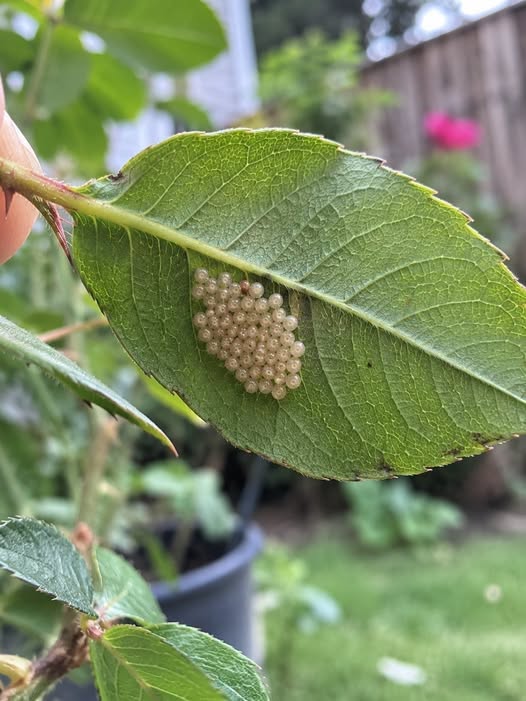
What Are These Tiny Eggs Under My Garden Leaf?
Written by Alexa Maks | August 20, 2026
Have you ever turned over a garden leaf and noticed a cluster of tiny pale eggs hiding underneath? At first glance, they may look like small seeds, beads, or even part of the plant itself.
In many cases, however, those tiny clusters are insect eggs.
The underside of a leaf is one of the most common places for insects to lay eggs because it offers protection from direct sunlight, rain, wind, and some predators. But before you remove an unfamiliar egg cluster, it is worth taking a closer look. Not every insect egg is a sign of a garden problem.
Why Do Insects Lay Eggs Under Leaves?
Leaves provide an excellent surface for many insects to reproduce.
The underside is often more sheltered than the top of the leaf, helping protect eggs while they develop. Different insects also have very different ways of laying their eggs. Some leave eggs individually, while others arrange dozens of eggs into neat clusters.
The shape, color, number, and arrangement of the eggs can provide useful clues about what insect left them behind.
For example, some stink bugs produce clusters of rounded or barrel-shaped eggs, while certain beetles lay brightly colored eggs in organized groups.
However, identifying insect eggs from appearance alone can sometimes be difficult. The plant where the eggs were found and any damage around them can provide additional clues.
What Could These Tiny Pale Eggs Be?
There are several possibilities when you discover small eggs underneath a garden leaf.
Stink Bug Eggs
Stink bugs are well known for laying groups of eggs on plant leaves. Depending on the species, the eggs may appear pale green, white, or another light color.
Many stink bug species feed on plants after hatching, and some can become garden pests. If you notice repeated egg clusters along with plant damage, it may be worth monitoring the plant more closely.
Leaf Beetle Eggs
Some leaf beetles also lay clusters of eggs on the undersides of leaves.
One familiar example is the Colorado potato beetle, which lays orange-yellow eggs in groups. These beetles can feed on plants such as potatoes, tomatoes, and eggplants.
Not every leaf beetle is equally harmful, though, so identification is important before taking action.
Moth Eggs
Certain moths also lay masses of eggs on leaves.
Some species deposit groups of pale eggs that may be difficult to notice until you inspect the underside of the foliage. Once the eggs hatch, the young caterpillars may provide a much easier clue because their feeding can leave visible holes or damaged edges on leaves.
If you discover an unfamiliar egg cluster, checking the plant again over the next several days can sometimes reveal what kind of insect you are dealing with.
Not Every Egg Cluster Is Bad
This is one of the most important things to remember.
Finding insect eggs on a plant does not automatically mean you have a pest infestation.
Some insects are beneficial and can actually help protect your garden.
Green lacewings are a great example. Their tiny eggs are often attached to foliage by delicate stalks, making them look like little white or pale droplets standing above the leaf.
Lacewing larvae are predators that feed on various small garden pests.
Because of this, removing every unfamiliar egg cluster could mean accidentally removing an insect that benefits your garden.
Should You Remove the Eggs?
That depends on what the eggs belong to.
If you identify the eggs as belonging to a garden pest and only a small number of clusters are present, physically removing the affected leaf or egg mass can sometimes be a practical option for a home garden.
However, it is better to identify first and remove second.
Avoid automatically spraying an unknown egg cluster with pesticides. Some insects are harmless, while others may be beneficial predators or pollinators.
A simple inspection can help you make a better decision.
How to Identify an Egg Cluster
When you discover tiny eggs under a leaf, examine several characteristics.
1. Look at the Color
Start with the color of the individual eggs.
They may be:
- White
- Pale green
- Yellow
- Orange
- Brown
- Dark or nearly black
Color alone usually isn’t enough to identify an insect, but it can help narrow down the possibilities.
2. Examine the Shape
Look closely at the individual eggs.
Are they round, oval, elongated, barrel-shaped, or almost impossible to distinguish individually?
A phone camera with good lighting or a small magnifying glass can make these details much easier to see.
3. Check the Arrangement
Pay attention to how the eggs are organized.
Are they:
- Arranged in neat rows?
- Packed tightly together?
- Scattered across the leaf?
- Attached to tiny stalks?
- Covered by a protective substance?
The arrangement can be one of the most useful clues when identifying an insect egg cluster.
4. Consider the Plant
The type of plant can also provide important information.
Some insects strongly prefer particular host plants. For example, Colorado potato beetles are commonly associated with plants in the nightshade family, including potatoes, tomatoes, and eggplants.
If you know which plant the eggs are on, include that information when trying to identify them.
5. Watch What Happens Next
If the plant isn’t being seriously damaged, you can sometimes observe the eggs rather than immediately removing them.
After hatching, the young insects may be much easier to identify than the eggs themselves.
Take a photograph when you first find the cluster and compare it with another photograph a few days later.
Check the Rest of the Plant
Don’t inspect only the single leaf where you discovered the eggs.
Look over the entire plant carefully.
Check:
- The undersides of leaves
- New shoots
- Stems
- Flower buds
- Damaged leaves
- Nearby plants
- Areas with webbing
- Leaves with unusual discoloration
Many garden pests are small and can easily go unnoticed.
Regularly checking both sides of leaves can help you spot problems before they become widespread.
Look for Other Signs of Insects
Eggs may not be the only clue.
You may also notice:
- Small holes in leaves
- Chewed leaf edges
- Yellow or pale spots
- Curling leaves
- Sticky residue
- Fine webbing
- Tiny insects hiding underneath leaves
- Unusual discoloration
- Damaged new growth
For example, aphids often gather around young stems and tender plant growth, while spider mites may cause fine speckling and delicate webbing.
Looking at the complete picture is much more reliable than identifying an insect based on eggs alone.
Should You Be Worried?
Usually, one unknown egg cluster is not a reason to panic.
A single cluster may belong to a harmless insect, a beneficial predator, or a pest that has not yet reached a level that threatens the plant.
Instead of immediately reaching for a spray, inspect the plant, photograph the eggs, and look for additional signs.
If you find many clusters appearing across several plants, significant leaf damage, or large numbers of newly hatched insects, then it may be time to take further action.
A Simple Approach for Gardeners
When you find mysterious eggs under a leaf, follow these simple steps:
- Take a clear photograph of the eggs.
- Note the plant where you found them.
- Check the color and shape of the eggs.
- Look at the arrangement of the cluster.
- Inspect the rest of the plant for damage or insects.
- Check nearby plants for additional clusters.
- Research the insect before removing or treating the eggs.
- Avoid unnecessary pesticides, especially when the insect has not been identified.
This approach can help protect both your plants and beneficial insects.
Final Thoughts
Finding tiny eggs underneath a garden leaf can certainly be surprising, but there is no need to assume the worst.
Those tiny pale clusters could belong to a garden pest, but they could also belong to an insect that plays a useful role in your garden ecosystem.
The best first step is simple: look closely before taking action.
Pay attention to the egg color, shape, arrangement, location, and the condition of the plant. Check for other insects and signs of feeding damage, and take a clear photograph if you need help identifying what you found.
With a little observation, that mysterious cluster under your garden leaf may turn out to be much easier to understand than it first appeared.