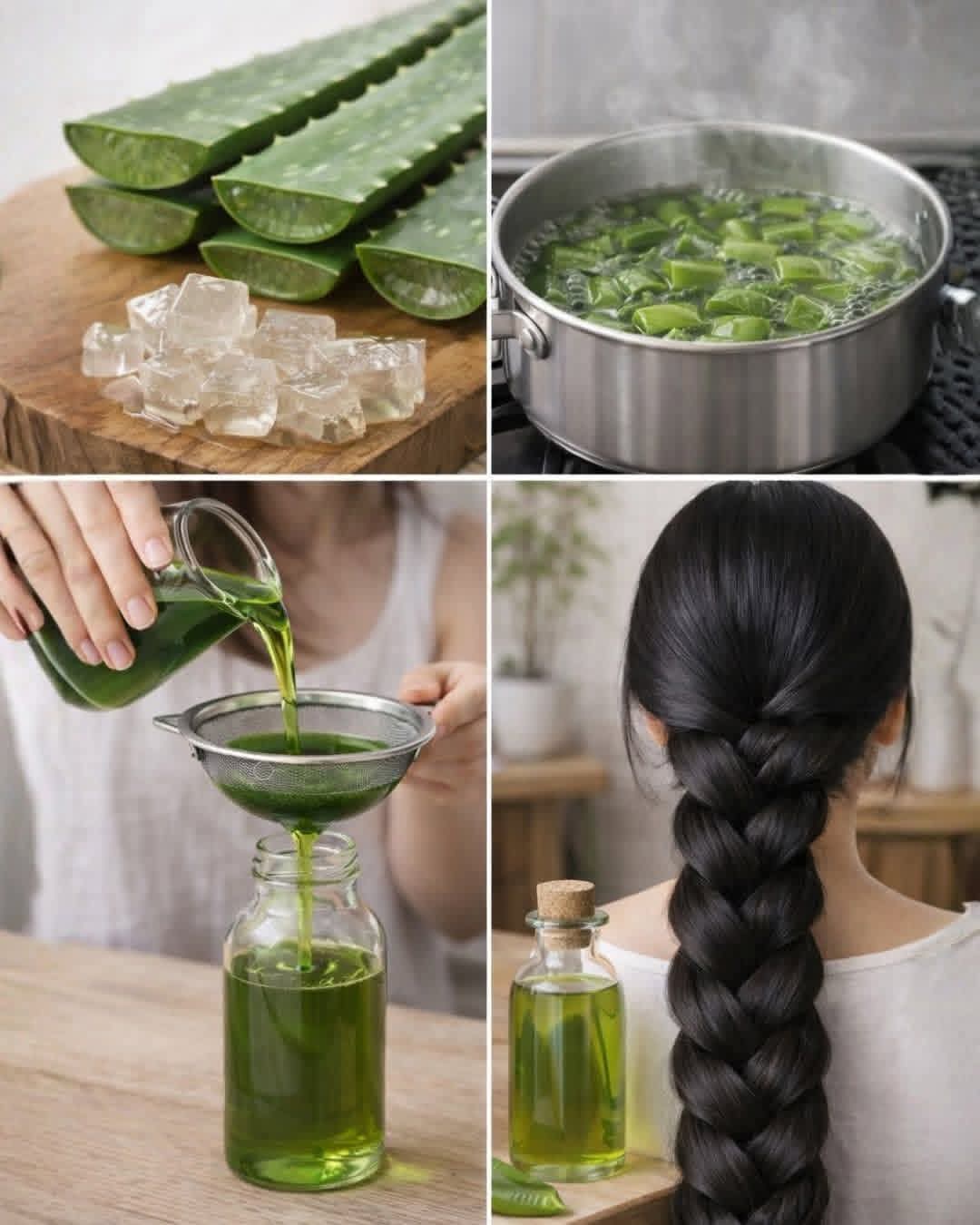
🌿 Homemade Aloe Vera Hair Oil for a Healthier Scalp
Aloe vera has been used traditionally for skin and hair care because its gel can be soothing and moisturizing. However, it is important to separate tradition from proven results: there is currently not enough good human evidence that aloe vera oil can make hair grow faster or stop true hair loss. Reviews have found aloe vera promising for scalp conditions, but clinical evidence for hair regrowth remains limited.
This recipe is therefore best viewed as a scalp-conditioning and hair-care oil, rather than a guaranteed hair-loss treatment.
🌿 Introduction
This homemade aloe vera oil combines fresh aloe vera gel with a nourishing carrier oil. The result is a simple treatment that can help moisturize dry hair and make the scalp and hair feel softer.
For the safest homemade version, we’ll use aloe vera gel that has been thoroughly separated from the yellow latex beneath the leaf skin and gently combine it with coconut or olive oil.
🥥 Ingredients
- 1 large fresh aloe vera leaf
- 1 cup coconut oil or extra-virgin olive oil
- 1 teaspoon vitamin E oil, optional
- 5–10 drops rosemary essential oil, optional
- A clean glass jar or bottle
- Fine-mesh strainer or cheesecloth
Important: Aloe can cause burning, itching, or dermatitis in some people. Patch-test a small amount first and stop if irritation occurs.
🧴 Method 1 — Aloe Vera Infused Oil
Step 1: Prepare the aloe
Wash the aloe leaf thoroughly.
Cut away the bottom and top ends and stand the leaf upright for about 10–15 minutes so the yellow latex can drain away.
Rinse the leaf again.
Remove the green outer skin and scoop out the clear inner gel.
Step 2: Prepare the gel
Cut the clear gel into small pieces.
Blend briefly until smooth.
Do not use the yellow latex. It can be irritating and is unnecessary for this hair treatment.
Step 3: Combine with oil
Place:
- 1 cup coconut or olive oil
- 2–3 tablespoons prepared aloe gel
into a small saucepan.
Warm over very low heat, stirring frequently.
The goal isn’t to fry the aloe. You simply want the water contained in the gel to evaporate while the oil becomes infused.
Step 4: Cook gently
Continue heating on very low heat for approximately 15–20 minutes, stirring regularly.
As the mixture cooks, the aloe will become darker and smaller.
Do not allow the oil to smoke or the aloe to burn.
Step 5: Strain
Allow the mixture to cool slightly.
Pour it through a fine-mesh strainer or cheesecloth into a clean, completely dry glass jar.
Press gently to extract the oil.
Discard the cooked aloe solids.
Step 6: Optional additions
Once the oil has cooled completely, you can add:
- 1 teaspoon vitamin E oil
- 5–10 drops rosemary essential oil
Mix well.
Never apply undiluted rosemary essential oil directly to the scalp.
💆 How to Use the Aloe Hair Oil
- Part your hair into sections.
- Apply a small amount of oil directly to the scalp.
- Massage gently with your fingertips for 5 minutes.
- Spread a little through the lengths and ends if your hair is dry.
- Leave for 30–60 minutes.
- Shampoo thoroughly.
- Condition as usual.
Start with 1–2 applications per week rather than using a large amount every day.
🌱 The Scalp-Massage Method
The massage is an important part of the routine because it distributes the oil evenly and helps prevent excessive rubbing or pulling of the hair.
Use the pads of your fingers—not your fingernails—and make small circular movements.
Avoid aggressive scratching or vigorous massage, particularly if your scalp is irritated.
🕰️ History & Tradition
Aloe vera has a long history of traditional use in skin care, particularly in warm and dry regions where the plant grows easily. Historical and dermatological literature describes aloe’s traditional applications for various skin conditions and inflammation.
Oils such as coconut and olive oil have also been used traditionally as hair-conditioning treatments. Combining aloe with a carrier oil is therefore a natural extension of traditional hair-care practices.
Modern research, however, has not established aloe vera oil as a proven treatment for androgenetic alopecia or other forms of genuine hair loss.
💚 What This Treatment May Help With
Aloe-based hair care may be useful for:
- Dry-feeling scalp
- Dry hair
- Hair that feels rough or brittle
- Scalp comfort
- Conditioning and shine
- Reducing breakage caused by dryness
But reduced breakage is not the same as stopping hair loss from the follicle.
If you’re experiencing noticeable thinning, bald patches, a widening part, or sudden shedding, identifying the cause is much more important than relying on a homemade oil.
🧪 Storage
Because fresh aloe contains a lot of water, homemade aloe preparations can spoil or develop microbial contamination.
For a homemade infusion:
- Use a completely dry, sterilized container.
- Keep water out of the finished oil.
- Store it in a cool, dark place.
- For maximum caution, make a small batch and use it relatively quickly rather than storing it for months.
- Throw it away if it develops an unusual smell, mold, cloudiness, or other changes.
For better shelf stability, a commercially prepared aloe-infused hair oil is generally preferable to a homemade mixture containing fresh aloe.
⚠️ Important Hair-Loss Note
If your goal is specifically to stop hair loss and regrow thinning areas, aloe vera should not replace evidence-based treatment. Current dermatology literature emphasizes that many natural hair remedies have limited clinical evidence.
Persistent or sudden hair loss can have many causes, including pattern hair loss, nutritional problems, scalp disorders, medications, hormonal changes, and other conditions. A dermatologist can help determine the cause and appropriate treatment.
❤️ Conclusion
This aloe vera hair oil makes a lovely traditional scalp and hair-conditioning treatment. Its greatest advantage is simplicity: aloe provides a soothing, moisturizing component while coconut or olive oil helps lubricate and condition the hair.
Just keep expectations realistic: it may support scalp and hair condition, but science has not established that homemade aloe vera oil makes hair grow faster or stops hair loss.
🌿 For Aloe Vera Hair-Care Lovers
If you enjoy natural hair-care rituals, try making a small batch, massage it gently into your scalp, wash it out thoroughly, and observe how your hair and scalp respond over several weeks. If irritation or increased shedding occurs, discontinue it.