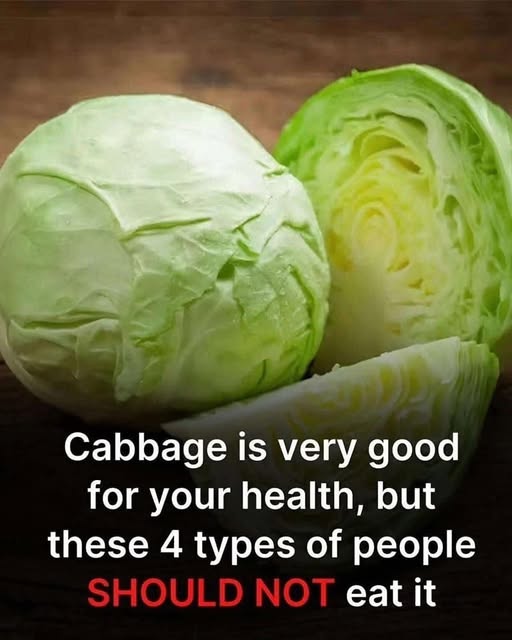
The 4 Types of People Who Shouldn’t Eat Cabbage: Health Risks You Should Know
Why Some People Should Avoid Eating Cabbage
Cabbage is rich in vitamins and fiber. However, it does not suit everyone. In certain cases, it may trigger discomfort or worsen existing conditions.
Therefore, understanding who should limit cabbage intake is important. This helps prevent unwanted health issues.
1. People with Thyroid Disorders
Cabbage contains compounds called goitrogens. These substances may interfere with thyroid function. As a result, they can affect hormone production.
Individuals with thyroid conditions should be cautious. Eating large amounts may worsen symptoms over time.
Moreover, raw cabbage has stronger effects. Cooking reduces these compounds significantly. Therefore, always cook cabbage before eating.
2. People with Sensitive Digestive Systems
Cabbage is high in fiber and sulfur compounds. While beneficial, they can cause digestive discomfort. For example, bloating and gas may occur.
People with sensitive stomachs often struggle to digest cabbage. Additionally, conditions like irritable bowel syndrome may worsen.
To reduce discomfort, eat smaller portions. Also, cook cabbage instead of eating it raw.
3. People Taking Blood-Thinning Medications
Cabbage contains vitamin K, which supports blood clotting. However, this can interfere with certain medications.
People taking blood thinners should monitor their intake carefully. Sudden changes in vitamin K levels may affect medication effectiveness.
Therefore, maintain consistent consumption if approved by a doctor.
4. People Prone to Kidney Stones
Cabbage contains oxalates in small amounts. These compounds may contribute to kidney stone formation.
Individuals with a history of kidney stones should be cautious. Excessive intake may increase the risk.
Drinking enough water can help reduce this effect. Additionally, balance cabbage with other low-oxalate foods.
Tips to Eat Cabbage Safely
Choose cooked cabbage instead of raw. Cooking reduces compounds that cause issues.
Eat moderate portions to avoid digestive discomfort.
Combine cabbage with other vegetables for balance.
Always consult a healthcare professional if you have existing conditions.
Health Benefits of Cabbage
Despite these concerns, cabbage remains highly nutritious. It provides vitamins C and K, along with antioxidants.
Moreover, it supports digestion and immune health. When consumed properly, it benefits overall wellness.
Conclusion: Know Your Body Before Eating Cabbage
Cabbage offers many health benefits. However, it may not suit everyone. Certain individuals should limit or adjust their intake.
By understanding these risks, you can make better dietary choices. Therefore, enjoy cabbage wisely and in moderation.