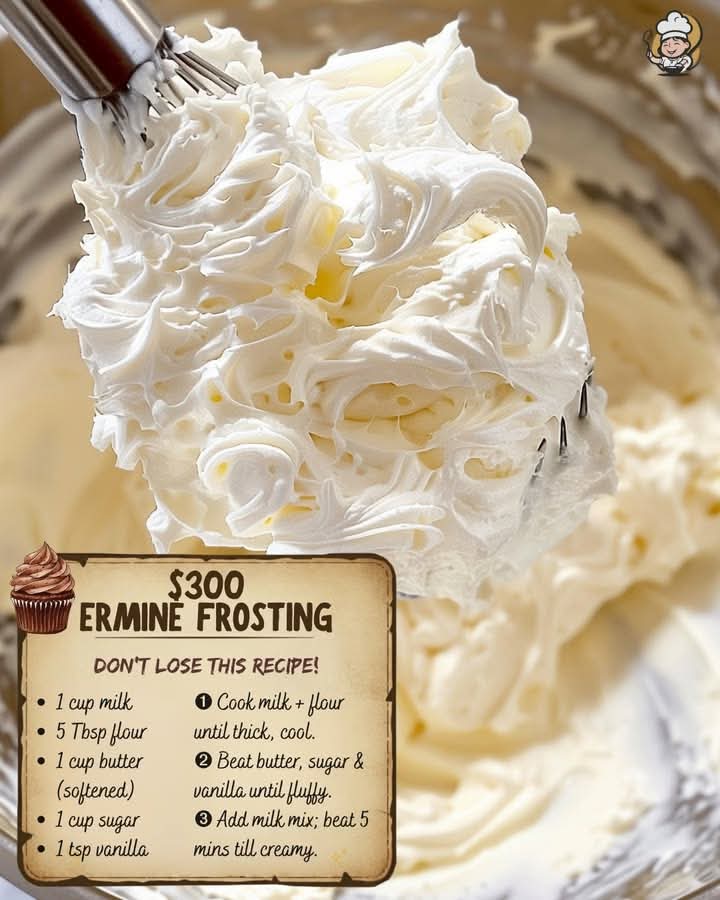
(Waldorf-Style Heritage Frosting)
Introduction
This heritage frosting is celebrated for its cloud-like texture, elegant silkiness, and balanced sweetness. Unlike heavy powdered-sugar buttercreams, this method begins with a gently cooked milk base that transforms into a velvety, luxurious finish once whipped with butter and sugar. The result is airy, smooth, and refined—perfect for cakes that deserve a graceful, old-fashioned touch.
Often associated with classic bakery traditions and hotel pastry kitchens, this frosting gained fame for its delicate mouthfeel and its ability to complement cakes without overwhelming them.
Ingredients
- 1 cup whole milk
- 5 tablespoons all-purpose flour
- 1 cup unsalted butter, softened (room temperature)
- 1 cup granulated sugar (superfine preferred)
- 1 teaspoon pure vanilla extract
- Pinch of salt
Method Overview (Formation of the Frosting)
This frosting forms in two essential stages:
- Cooked Base (Roux Pudding) – Milk and flour are cooked into a thick, smooth paste.
- Whipped Emulsion – Butter and sugar are beaten until fluffy, then blended with the cooled base into a silky frosting.
This two-part method is what creates the signature lightness.
Step-by-Step Instructions
1) Prepare the Milk Base
- In a saucepan over medium heat, whisk together milk and flour.
- Stir continuously to prevent lumps.
- Cook until the mixture thickens into a pudding-like paste (about 5–7 minutes).
- Remove from heat and let it cool completely to room temperature.
Tip: Cover with plastic wrap touching the surface to prevent a skin.
2) Cream the Butter and Sugar
- In a mixing bowl, beat the softened butter and sugar together for 4–6 minutes.
- The mixture should become pale, fluffy, and nearly grain-free.
- Add vanilla extract and salt.
3) Combine and Whip
- Add the cooled milk base to the butter mixture, one spoonful at a time.
- Continue whipping on medium-high speed for 5–8 minutes.
- The frosting will transform into a light, whipped, silky cream.
Texture and Behavior
- Spreads effortlessly without tearing cake layers.
- Pipes beautifully while holding soft shapes.
- Sets to a smooth, satin finish.
- Not overly sweet, making it ideal for rich cakes like chocolate or red velvet.
A Bit of History
Before modern powdered-sugar buttercreams became popular, this frosting was widely used in early 20th-century American baking. It became especially known as the original partner to red velvet cake. Its refined texture made it a favorite in upscale kitchens and classic bakeries long before shortcuts replaced traditional techniques.
Tips for Success
- The milk mixture must be fully cooled before mixing.
- Beat butter and sugar long enough to remove grittiness.
- If the frosting looks separated, keep whipping—it will come together.
- Works best at room temperature for spreading.
Cakes That Love This Frosting
- Chocolate layer cake
- Red velvet cake
- Vanilla sponge cake
- Coconut cake
- Carrot cake
Conclusion
This old-fashioned frosting proves that elegance comes from technique, not excess sugar. With its soft structure, delicate sweetness, and luxurious mouthfeel, it turns any homemade cake into a bakery-style masterpiece. A timeless method that rewards patience with unforgettable results.