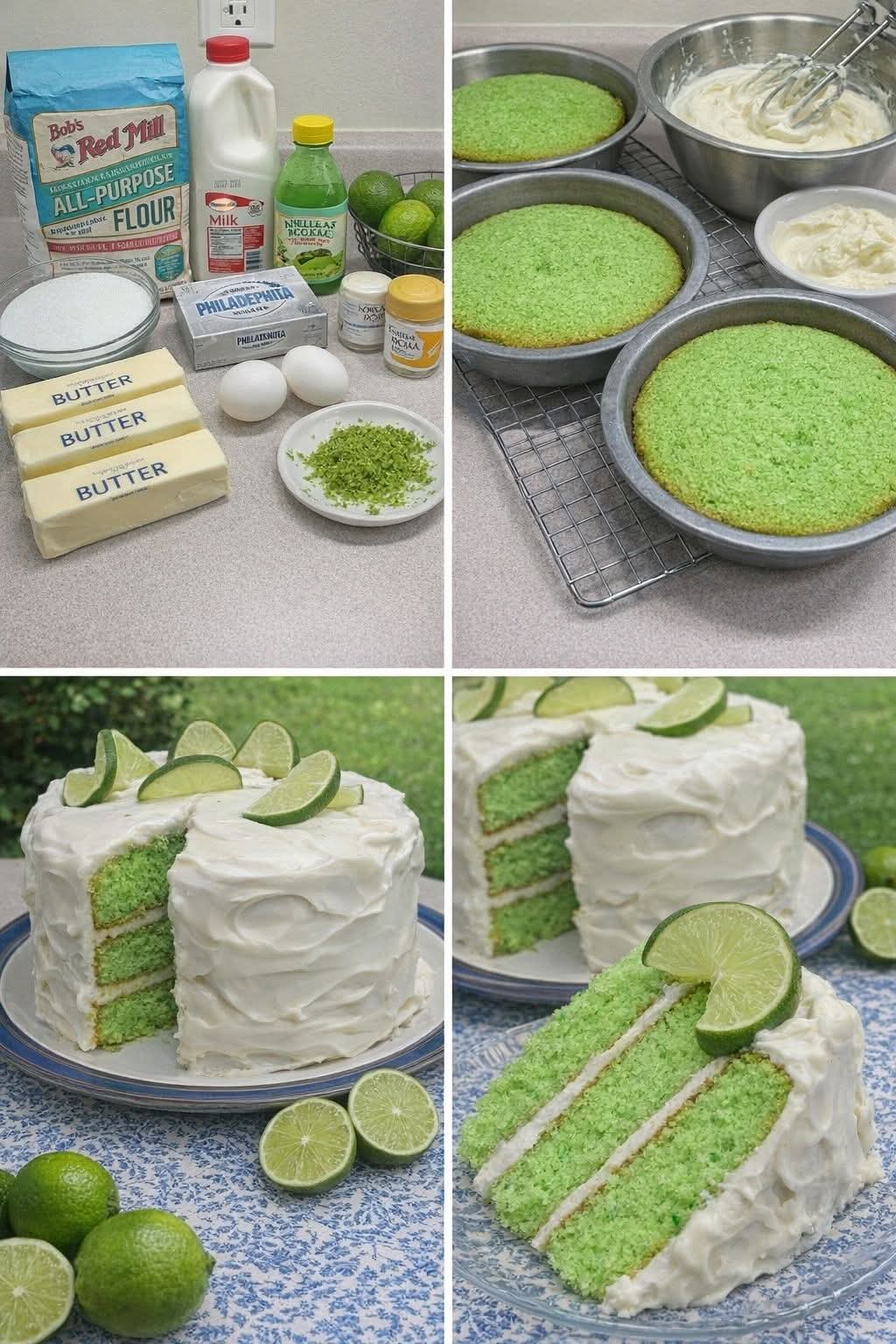
🍋 Key Lime Cream Cheese Cake – Don’t LOSE This Recipe 😍
If you love bright citrus flavor wrapped in silky, creamy goodness, this Key Lime Cream Cheese Cake is about to become your new favorite dessert. It’s smooth, refreshing, slightly tangy, and perfectly sweet — the kind of treat that tastes like sunshine in every bite.
This recipe is simple, requires minimal ingredients, and can be made as a no-bake dessert or lightly baked for a firmer texture. Whether you’re serving it for family gatherings, holidays, or just a sweet weekend craving, this cake always steals the show.
And yes… you’ll want to save this one. 😉
🛒 Ingredients
🧀 Filling:
- 8 oz cream cheese, softened
- 1/2 cup sweetened condensed milk
- 1/4 cup key lime juice (fresh or bottled)
- 1 teaspoon lime zest (optional but highly recommended)
- 1 teaspoon vanilla extract
🥧 Optional Crust (Highly Recommended):
- 1 1/2 cups graham cracker crumbs
- 1/3 cup melted butter
- 2 tablespoons sugar
🍥 Optional Toppings:
- Whipped cream
- Extra lime zest
- Thin lime slices
👩🍳 Instructions
Step 1: Prepare the Crust (If Using)
- In a bowl, mix graham cracker crumbs, melted butter, and sugar.
- Press mixture firmly into the bottom of a 7–8 inch pan.
- Chill in the refrigerator for 20–30 minutes to firm up.
Step 2: Make the Creamy Lime Filling
- In a large bowl, beat softened cream cheese until smooth and fluffy.
- Add sweetened condensed milk and mix until fully combined.
- Slowly pour in key lime juice while mixing (the mixture will thicken naturally).
- Add lime zest and vanilla extract.
- Beat until silky and smooth with no lumps.
Step 3: Assemble
- Pour the filling over the chilled crust.
- Smooth the top with a spatula.
- Refrigerate for at least 4 hours (overnight is best) until fully set.
🔥 Optional Baked Version Method
If you prefer a slightly firmer cheesecake texture:
- Preheat oven to 325°F (160°C).
- Prepare crust as directed.
- Pour filling into crust.
- Bake for 15–18 minutes (do not overbake).
- Cool completely, then refrigerate 4 hours before serving.
📜 The History Behind Key Lime Desserts
Key lime desserts are closely associated with the sunny shores of . The famous was created in the late 19th century when fresh milk was scarce in Florida, and cooks relied on sweetened condensed milk.
The natural acidity of key lime juice reacts with condensed milk, thickening it without baking — which is why many traditional recipes are no-bake! This cake is a creamy evolution of that classic pie, combining cheesecake richness with tropical citrus brightness.
🧪 Formation & Food Science
What makes this recipe magical?
- Acid + Dairy Reaction: The lime juice thickens the condensed milk naturally.
- Cream Cheese Structure: Provides body and smoothness.
- Chilling Time: Allows proteins and fats to stabilize, creating a firm yet creamy texture.
That tangy-sweet balance is chemistry working deliciously in your favor!
❤️ Why Everyone Loves This Cake
✔️ No complicated steps
✔️ Minimal ingredients
✔️ No gelatin needed
✔️ Perfect make-ahead dessert
✔️ Refreshing after heavy meals
✔️ Crowd-pleasing for all ages
This is one of those desserts people ask for again and again.
💡 Extra Tips for Success
- Always use room temperature cream cheese for smooth texture.
- Fresh key limes give stronger flavor, but bottled juice works well.
- Don’t skip the chill time — patience makes it perfect.
- Add a pinch of salt to enhance flavor depth.
🍽 Serving Ideas
- Serve chilled straight from the fridge.
- Pair with fresh berries.
- Drizzle with white chocolate for a gourmet touch.
- Freeze slightly for a firmer, ice-cream-like texture.
📝 Conclusion
This Key Lime Cream Cheese Cake is creamy, tangy, light, and unforgettable. It’s the perfect balance between cheesecake and key lime pie — simple enough for beginners, impressive enough for guests.
One bite and you’ll understand why this recipe deserves a permanent place in your collection.
✨ Save it. Share it. Make it again and again.
If you love easy, comforting desserts like this, tell me and I’ll send you another must-save favorite! 🍋💛