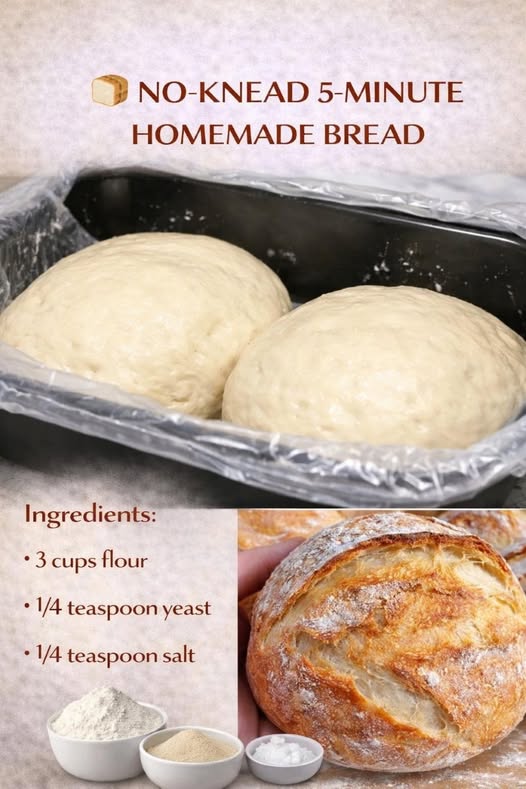
No-Knead 5-Minute Homemade Bread: A Complete Guide to Effortless Artisan Baking
Introduction to Effortless Homemade Bread
We believe that homemade bread should be accessible, reliable, and deeply satisfying. With the No-Knead 5-Minute Homemade Bread method, we achieve a bakery-quality loaf using minimal hands-on time, basic pantry ingredients, and a foolproof process that delivers consistent results. This approach eliminates complicated techniques while preserving the crisp crust, soft crumb, and rich flavor that define exceptional bread.
This comprehensive guide presents a refined method designed for home bakers seeking dependable outcomes without the need for specialized equipment or advanced skills. Every detail matters, from ingredient selection to baking temperature, ensuring a loaf that rivals artisan bread found in professional bakeries.
Why No-Knead Bread Works Perfectly
The brilliance of no-knead bread lies in time and hydration. By allowing the dough to rest and ferment slowly, gluten develops naturally without physical kneading. This process creates a strong internal structure, improved flavor complexity, and an open, airy crumb.
High hydration encourages enzymatic activity, while extended fermentation enhances aroma and taste. The result is a dough that transforms effortlessly into a golden, crackling loaf with minimal effort.
Essential Ingredients for Perfect Results
We rely on simple, high-quality ingredients that work together harmoniously:
- All-purpose flour: Provides balanced structure and tenderness
- Active dry yeast: Ensures steady fermentation and lift
- Fine sea salt: Enhances flavor and controls yeast activity
- Warm water: Activates yeast and hydrates flour evenly
Precision matters. Using accurate measurements guarantees predictable texture and rise, ensuring the dough performs as expected every time.
Step-by-Step No-Knead Bread Method
Mixing the Dough
In a large bowl, we combine flour, yeast, and salt thoroughly. Warm water is added gradually, stirring until a shaggy, sticky dough forms. This process takes less than five minutes and requires no special tools beyond a spoon or spatula.
Resting and Fermentation
We cover the bowl loosely and allow the dough to rest at room temperature for 12 to 18 hours. During this time, natural fermentation develops gluten strength and deep flavor. The dough will double in size and display bubbles on the surface, signaling readiness.
Shaping with Minimal Handling
After fermentation, we gently turn the dough onto a floured surface. Using light folds rather than kneading, we shape it into a round loaf. This step preserves internal air pockets, crucial for a light crumb.
Final Proof
The shaped dough rests briefly while the oven preheats. This final rise improves oven spring and ensures even expansion during baking.
Baking for Artisan-Style Results
Optimal Oven Setup
We preheat the oven to 450°F (232°C) with a heavy, oven-safe pot inside. This method traps steam, creating a professional baking environment that promotes crust development.
Steam and Heat
Once heated, the dough is transferred into the pot, covered, and baked. Steam released from the dough creates a thin, crisp crust while maintaining moisture inside. After initial baking, removing the lid allows the crust to deepen in color and texture.
Cooling for Structure
Cooling the loaf on a wire rack is essential. This step allows the crumb to set fully, preventing gumminess and preserving texture.
Texture, Flavor, and Appearance
The finished loaf features a deeply caramelized crust, a soft, elastic interior, and a balanced flavor profile with subtle fermentation notes. The contrast between crunchy exterior and tender crumb defines exceptional bread.
Common Mistakes and How We Avoid Them
- Dense crumb: Resolved by ensuring proper hydration and fermentation time
- Flat loaf: Prevented through adequate oven heat and minimal handling
- Pale crust: Corrected by baking uncovered during the final stage
Attention to these details ensures consistent success.
Flavor Variations and Enhancements
We elevate basic no-knead bread with thoughtful additions:
- Whole wheat flour for nutty depth
- Seeds and grains for texture and nutrition
- Herbs and spices for aromatic complexity
- Olives or roasted garlic for savory richness
Each variation follows the same foundational method, maintaining simplicity while expanding flavor possibilities.
Serving and Storage Suggestions
Freshly baked bread pairs beautifully with butter, olive oil, soups, and cheeses. For storage, we recommend wrapping the loaf in a clean cloth at room temperature for up to two days. Freezing sliced portions preserves freshness and convenience.
Health and Nutritional Benefits
Homemade no-knead bread offers controlled ingredients, reduced preservatives, and improved digestibility through natural fermentation. The slow rise enhances nutrient absorption while delivering satisfying flavor without unnecessary additives.
Why This Method Belongs in Every Kitchen
We recognize the value of techniques that respect time without sacrificing quality. No-Knead 5-Minute Homemade Bread represents a perfect balance of efficiency and craftsmanship, empowering home bakers to produce professional-level bread with confidence.
This method proves that outstanding bread does not require complexity—only patience, precision, and respect for the process.