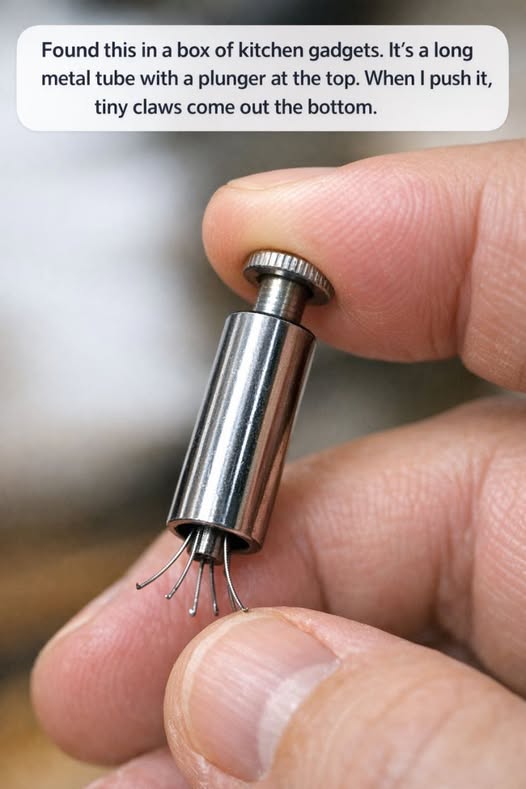
Found a Long Metal Tube with a Plunger and Tiny Claws? Here’s What It Is


If you found a long metal tube with a plunger on top — and when you press it, small metal claws pop out of the bottom — you’ve uncovered a vintage pickle picker (also called an olive grabber or cocktail picker).
It may look like a tiny robot claw from a sci-fi movie, but it’s actually a clever mid-century kitchen gadget.
🥒 What Is It?
This tool is commonly known as a pickle picker.
It was designed to:
- Grab pickles from jars
- Retrieve olives from narrow containers
- Lift cocktail garnishes
- Pick up small slippery foods
Before wide-mouth jars and modern tongs were common, getting a pickle out without sticking your fingers in the jar was surprisingly tricky. This gadget solved that problem neatly and hygienically.
⚙️ How the Claw Mechanism Works
The design is simple but smart:
- Press the plunger on top.
- An internal spring compresses.
- The tiny claws at the bottom open outward.
- Release the plunger.
- The claws close tightly around the item.
It works similarly to modern mechanical grabbers, just in a smaller, food-safe version.
🏡 Why It Was So Popular
In the 1940s–1970s:
- Cocktail parties were common.
- Serving etiquette mattered.
- Jarred foods like pickles and olives were staples.
The pickle picker allowed hosts to serve food neatly without using fingers or forks. It was considered both practical and a little fancy.
🍸 Variations You Might See
Over time, similar tools were marketed as:
- Olive grabbers
- Cocktail cherry pickers
- Relish grabbers
- Hors d’oeuvre servers
Some versions have:
- Smaller claws
- Chrome plating
- Maker’s stamps
- Decorative handles
🧼 Can You Still Use It?
Yes — with a quick inspection first.
Before using:
- Check for rust or corrosion
- Make sure the spring works smoothly
- Wash thoroughly with warm soapy water
- Dry completely to prevent rust
For older pieces, a little food-safe mineral oil on the spring mechanism can help keep it moving smoothly.
💰 Is It Worth Anything?
Most pickle pickers aren’t highly valuable, but collectors of vintage kitchenware enjoy them.
Value depends on:
- Condition
- Brand or maker’s mark
- Functionality
- Original packaging
They’re commonly found at:
- Estate sales
- Thrift stores
- Flea markets
- Old kitchen drawers
Well-preserved ones may sell for a modest collectible price, especially if stamped by a known manufacturer.
🎉 Fun Modern Uses
Even if you don’t eat pickles often, it’s still handy for:
- Grabbing olives from jars
- Fishing out pepperoncini
- Lifting artichoke hearts
- Garnishing cocktails
- Serving charcuterie boards
- Retrieving small items from narrow containers
It’s also a guaranteed conversation starter.
🧠 Why It Looks So Strange Today
Modern kitchens rely on:
- Silicone tongs
- Wide-mouth jars
- Plastic serving forks
So this old-fashioned mechanical claw feels unusual — but it was once a clever little luxury item.
The Bottom Line
You didn’t find a sci-fi gadget or a mysterious tool.
You found a vintage pickle picker — a charming piece of mid-century kitchen history designed to grab slippery pickles and olives with style.
If you’d like, you can describe:
- Any markings stamped on it
- The material (stainless? chrome?)
- Approximate age of the house it came from
I can help estimate whether it’s mid-century original or a later reproduction.