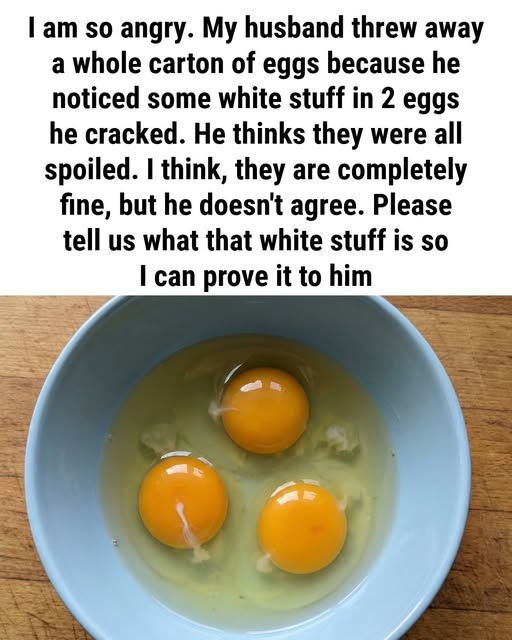
What Is That White Stuff in Eggs? (Spoiler: It’s Not What You Think!)
You crack open an egg—and there it is.
That strange, white, stringy blob clinging to the yolk.
For years, many people assumed it was something bad. A defect. A sign the egg had gone bad. Maybe even something that needed to be removed.
But here’s the truth:
That white stringy part is completely normal.
It’s safe.
It’s edible.
And it’s actually a sign of a fresh egg.
It even has a name: the chalaza (pronounced shuh-LAY-zuh).
What Exactly Is the Chalaza?

The chalaza comes from a Greek word meaning “little knot.”
It is:
- Not an embryo
- Not a blood clot
- Not a parasite
- Not a sign the egg is spoiled
The chalaza is a natural protein structure made from twisted strands of egg white (albumen).
Its Purpose?
To keep the yolk centered inside the egg.
Think of it as a natural suspension system. It holds the yolk in place and prevents it from hitting the shell.
If the egg were fertilized, this structure would help protect a developing chick by stabilizing the yolk.
Why Are There Two Chalazae?
Most eggs actually have two chalazae — one on each side of the yolk.
They anchor the yolk like a tiny hammock suspended inside the egg white.
When you crack an egg into a bowl, you usually see one strand more clearly than the other.
Does a Visible Chalaza Mean the Egg Is Fresh?
Yes — and this is important.
A more noticeable chalaza usually means the egg is fresher.
As eggs age:
- The egg white becomes thinner
- The yolk flattens
- The chalaza becomes less visible
So if you see a thick, firm white strand attached to a round, tall yolk — that’s actually a good sign.
Is It Safe to Eat?
Absolutely.
The chalaza is:
- 100% edible
- Made of protein
- Safe in all cooking methods
Most people don’t even notice it after cooking scrambled eggs, omelets, or baking recipes.
Professional chefs sometimes remove it for texture reasons in custards or delicate dishes, but it is not harmful.
Why Do Some Eggs Have Bigger Chalazae?
Several factors affect chalaza size:
- Egg freshness
- Hen’s diet
- Storage conditions
- Egg variety
Farm-fresh eggs often have more prominent chalazae compared to older store-bought eggs.
Common Egg Myths (Clearing the Confusion)
❌ Myth: It’s a baby chick.
Only fertilized eggs can develop into chicks. Most grocery store eggs are not fertilized.
❌ Myth: It means the egg is bad.
In fact, it usually means the egg is fresh.
❌ Myth: It’s unhealthy.
It’s simply protein — nothing more.
How to Tell If an Egg Is Actually Bad
Instead of judging by the chalaza, check for:
- A strong sulfur smell
- Slimy texture
- Discolored egg white
- Floating egg in water test (older eggs float)
If the egg smells normal and looks clean, it’s safe to use.
Final Thoughts
The next time you crack an egg and see that white stringy strand, don’t panic.
That little structure — the chalaza — is simply nature doing its job.
It keeps the yolk centered, protects the egg’s structure, and often signals that your egg is fresh.
Sometimes the things we worry about most in the kitchen turn out to be completely harmless — and even fascinating.