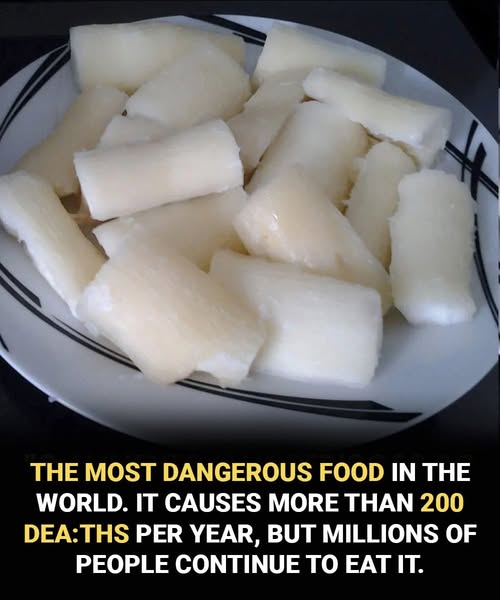
Toxic If Improperly Prepared: The Hidden Risk of Cassava
A Global Staple with a Little-Known Danger
Cassava is one of the most widely consumed foods on the planet, quietly supporting daily diets across Africa, South America, and Southeast Asia. Many people consume it without realizing it appears in familiar forms such as tapioca pearls, gluten-free flour, and boiled root vegetables served alongside stews and sauces.
Despite its importance as a calorie-dense, drought-resistant crop, cassava carries a hidden risk. When improperly prepared, certain varieties can release toxic compounds that pose serious health threats. Understanding this risk is essential, because food security is not only about availability—it is about safe consumption.
What Exactly Is Cassava?
Cassava (Manihot esculenta) is a starchy root crop originally domesticated in South America and now cultivated extensively in tropical regions. It thrives in poor soils and harsh climates, making it indispensable in areas vulnerable to drought and famine.
There are two primary categories of cassava, and the distinction between them is critical for safety:
Sweet Cassava
- Contains low levels of natural toxins
- Often consumed boiled, fried, or roasted
- Common in household cooking when properly prepared
Bitter Cassava
- Contains significantly higher toxin levels
- More resilient and higher-yielding
- Requires careful processing before consumption
Bitter cassava is frequently grown because it survives extreme conditions better than sweet varieties, but it also carries a much higher risk if mishandled.
Why Cassava Can Be Dangerous
Cassava naturally contains cyanogenic glycosides, primarily linamarin and lotaustralin. These compounds are part of the plant’s natural defense system against pests.
When cassava is:
- peeled
- grated
- crushed
- chewed
- or inadequately cooked
these compounds can break down and release hydrogen cyanide, a substance that interferes with the body’s ability to use oxygen at the cellular level.
While the human body can detoxify very small amounts, repeated exposure or high intake overwhelms this system, leading to poisoning.
Health Effects of Improperly Prepared Cassava
Acute Cyanide Poisoning
Short-term exposure to high levels can cause symptoms such as:
- headache
- dizziness
- nausea
- vomiting
- rapid breathing
- weakness and confusion
In severe cases, cyanide poisoning can result in respiratory distress and loss of consciousness.
Chronic Exposure and Long-Term Damage
Regular consumption of poorly processed cassava—especially during food shortages—can lead to long-term neurological damage. This risk is highest when cassava becomes the primary or sole food source.
Konzo: A Disease Linked to Cassava Toxicity
One of the most devastating outcomes associated with chronic cassava toxicity is konzo, a neurological disorder documented primarily in parts of sub-Saharan Africa.
What Is Konzo?
Konzo is a sudden-onset, irreversible paralysis of the legs, most often affecting children and women of childbearing age. The name comes from a local term meaning “tied legs,” reflecting the condition’s most visible symptom.
What Causes Konzo?
Konzo is strongly linked to:
- long-term consumption of insufficiently processed bitter cassava
- protein-poor diets that limit the body’s detoxification capacity
- periods of drought, conflict, or famine
Once developed, the paralysis does not improve, highlighting the critical importance of prevention.
Traditional Methods That Make Cassava Safe
For centuries, communities that rely on cassava have developed effective processing techniques to remove toxins. When followed correctly, these methods dramatically reduce risk.
Peeling
The highest concentration of toxins is found in the peel and outer layers.
Soaking
Grated or sliced cassava is soaked in water for extended periods, allowing toxins to leach out.
Fermentation
Fermentation breaks down cyanogenic compounds and is commonly used to make foods like gari and fufu.
Drying
Sun-drying reduces moisture and allows volatile toxins to dissipate.
Thorough Cooking
Boiling or steaming cassava in ample water removes remaining traces when combined with earlier steps.
Skipping or shortening these processes significantly increases danger.
Modern Foods and Cassava Safety
Many commercially produced cassava-based products—such as tapioca starch and flour—are processed under strict safety standards. Problems typically arise when:
- cassava is prepared at home without adequate knowledge
- bitter varieties are mistaken for sweet cassava
- processing steps are rushed due to food scarcity
Education plays a vital role in preventing illness.
Why Awareness Matters
Cassava will remain a cornerstone of global nutrition due to its resilience and affordability. However, its benefits must be balanced with proper handling knowledge.
The risks associated with cassava are not a reason to avoid it, but a reminder that traditional food knowledge exists for a reason. Communities that understand and apply safe preparation methods can continue to rely on cassava without harm.
Final Perspective
Cassava’s story is one of both survival and caution. It feeds hundreds of millions, yet demands respect and understanding. When prepared correctly, it is a safe, nourishing staple. When mishandled, it becomes a silent threat.
True food security lies not only in growing enough food, but in ensuring that what we eat sustains life rather than endangers it.